
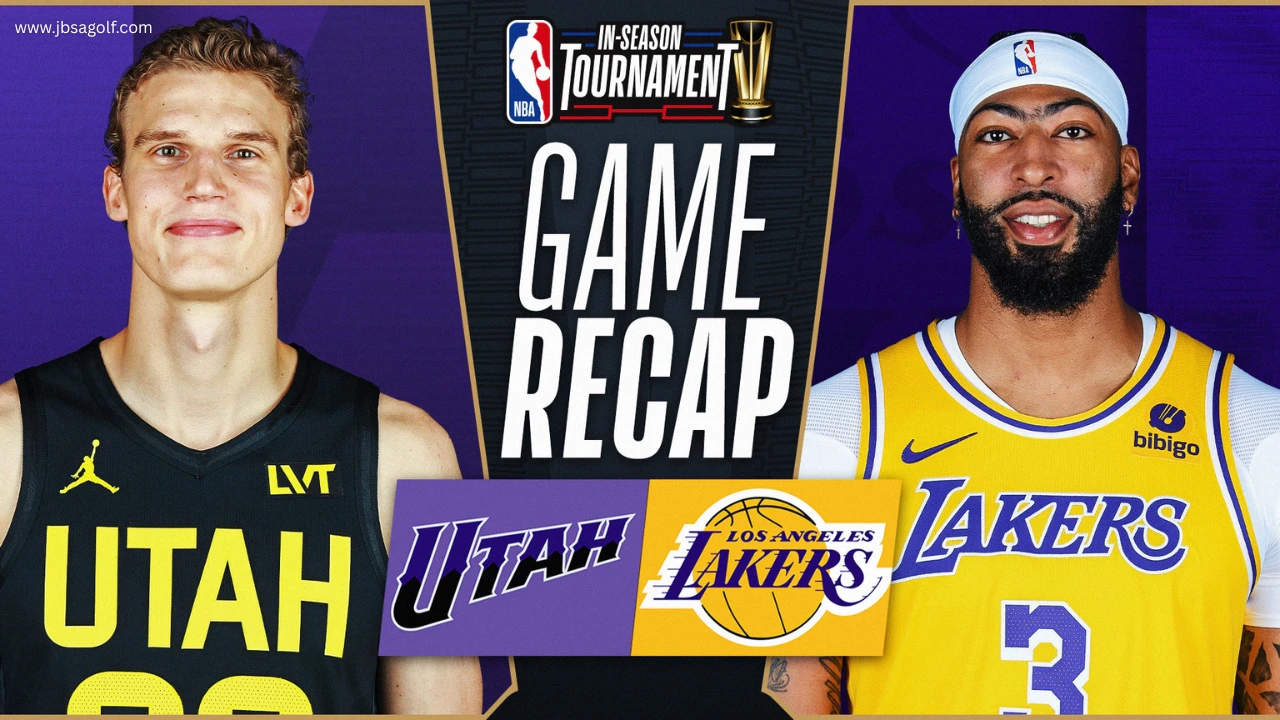
The recent clash between the Utah Jazz and the Los Angeles Lakers brought plenty of excitement to basketball fans. Both teams came into the game with different goals – the Jazz aiming to solidify their position in the standings and the Lakers looking to continue their push for dominance. This game offered thrilling moments, intense defense, and standout performances that fans will remember. Let’s dive into the Utah Jazz vs Lakers match player stats and analyze how each key figure contributed to the action.
First Quarter Highlights
The game started at a rapid pace, with the Lakers showing their offensive intent early on. LeBron James immediately took control of the tempo, scoring back-to-back jumpers and assisting on a fast-break dunk. Anthony Davis dominated in the paint, using his height and agility to secure multiple rebounds and block shots.
For the Jazz, Lauri Markkanen proved to be a major threat from the perimeter, hitting two early three-pointers. Jordan Clarkson used his quickness to penetrate the Lakers’ defense, creating open looks for his teammates. By the end of the first quarter, the stats showed both teams shooting well from the field, with the Lakers holding a narrow lead.
Second Quarter: Bench Contributions
The second quarter highlighted the depth of both rosters. The Lakers’ bench players, particularly Austin Reaves and Rui Hachimura, played a significant role. Reaves knocked down key mid-range shots while Hachimura battled hard on defense, adding crucial rebounds.
On the Jazz side, Collin Sexton’s aggressive drives to the basket put pressure on the Lakers’ defense. His ability to draw fouls and score in traffic kept the Jazz close on the scoreboard. The Utah Jazz vs Lakers match player stats from this period reflected balanced scoring, with both starting lineups resting and the benches stepping up to maintain the intensity.
Third Quarter: Stars Shine Bright
The third quarter was where the big names truly took over. LeBron James showcased his playmaking ability, dishing out assists while also hitting tough shots under defensive pressure. Anthony Davis continued his dominance inside, registering double-digit rebounds and multiple blocks.
For the Jazz, Markkanen maintained his hot shooting streak, adding several more points from beyond the arc. Walker Kessler provided defensive energy, challenging every Lakers’ shot attempt in the paint. This quarter was defined by runs from both sides, with the Lakers briefly extending their lead before the Jazz responded with a scoring burst of their own.
Fourth Quarter: Decisive Moments
As the final quarter began, the score remained tight, and every possession mattered. The Lakers relied heavily on their experienced stars to guide them. LeBron’s clutch three-pointer and Davis’s crucial put-back basket in the final minutes helped them maintain control.
The Jazz, however, refused to back down. Clarkson and Sexton combined for a series of quick baskets, forcing the Lakers to defend at full strength. The Utah Jazz vs Lakers match player stats in this decisive quarter showed how evenly matched both teams were in shooting percentages and defensive stops. The difference came down to late-game execution, where the Lakers’ experience gave them the edge.
Key Lakers Player Stats
-
LeBron James: Points in the high 20s, with notable assists and rebounds, making him the engine of the offense. His leadership and ability to control the game’s pace were vital.
-
Anthony Davis: A double-double performance with points and rebounds, plus multiple blocked shots. His defensive presence disrupted the Jazz’s interior scoring.
-
Austin Reaves: Contributed off the bench with efficient shooting and smart ball movement.
-
Rui Hachimura: Provided valuable minutes, adding defensive stops and second-chance points.
Key Utah Jazz Player Stats
-
Lauri Markkanen: Led the team in scoring with efficient three-point shooting, stretching the Lakers’ defense.
-
Jordan Clarkson: Offered creativity on offense, driving into the lane and finding open teammates.
-
Collin Sexton: Added energy and aggressiveness, drawing fouls and keeping the defense on edge.
-
Walker Kessler: Anchored the defense with shot-blocking and tough rebounding.
Statistical Comparisons
When comparing the Utah Jazz vs Lakers match player stats, both teams had similar shooting percentages from the field, hovering in the mid-40% range. The Lakers held a slight edge in rebounds, largely due to Davis’s work inside. Turnovers were close, with each team committing under 15, but the Lakers capitalized on transition opportunities more effectively.
Three-point shooting was a highlight for the Jazz, with Markkanen leading the way, but the Lakers balanced this with strong interior scoring. Free-throw accuracy also played a role, as the Lakers converted their chances at a slightly higher rate in crunch time.
Defensive Battles
Defense was a major storyline throughout the game. The Lakers used a mix of man-to-man coverage and switching to limit the Jazz’s perimeter looks. Davis’s rim protection forced the Jazz to take more contested shots inside.
The Jazz countered by doubling LeBron on certain possessions, forcing the ball out of his hands. Kessler’s shot-blocking and Markkanen’s length on defense kept the game competitive until the final buzzer.
Impact on Season Outlook
This game had implications beyond the final score. For the Lakers, a win boosts their momentum and confidence, especially with strong performances from their key players. The Jazz, while coming up short, proved they can challenge top teams and compete at a high level. The Utah Jazz vs Lakers match player stats from this game show that the gap between them is narrower than some might expect.
Final Thoughts
The matchup delivered everything fans hoped for—star performances, high-intensity defense, and moments of brilliance on both ends. The Utah Jazz vs Lakers match player stats tell the story of a game where both sides had opportunities, but the Lakers’ composure in the final minutes sealed their victory.
From LeBron’s leadership to Markkanen’s sharpshooting, each player left their mark on this contest. As the season progresses, both teams will look to build on these performances, knowing that every game is a step toward their ultimate goals.